After 119 pages (of 608), I’m absolutely enthralled with Eric Metaxas’ biography on Dietrich Bonhoeffer. The life of Bonhoeffer is amazing to me (even after only 20% of the book), and Mextaxas is opening my eyes to a world that I just didn’t know about before. One thing that I just can’t get out of mind is the perspective Bonhoeffer has on the world around him as his extensive travels take him literally every where, including the USA in 1930 (post World War I). As a German national, he provides a very unique perspective our this side of the Atlantic, and it has challenged me to think about what it means to be a Christian and live in a specific country at any point in history. It’s a challenging thought as I think about how much living in America shapes my view of the world around me. Even though I strive to see it through a Biblical lens, I often see it through my American one, and that is sometimes hard to swallow. All that to say, I’m excited about the remainder of this story and this man. I hope to learn from his experiences, his insight, and maybe even his death.
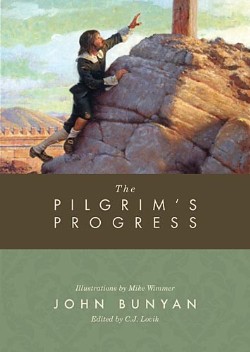
I don’t have a Kindle or any e-reader for that matter, but if I did I’d be buying this $0.95 (yes, 95 cents!) copy of The Pilgrim’s Progress. Not sure how long this deal will last, so go get a copy of this wonderful book for cheap.
One of my favorites sites right now is Goodreads. Their “About Us” page describes the service this way:
Goodreads is the largest social network for readers in the world. We have more than 5,200,000 members who have added more than 160,000,000 books to their shelves. A place for casual readers and bona-fide bookworms alike, Goodreads members recommend books, compare what they are reading, keep track of what they’ve read and would like to read, form book clubs and much more. Goodreads was launched in December 2006.
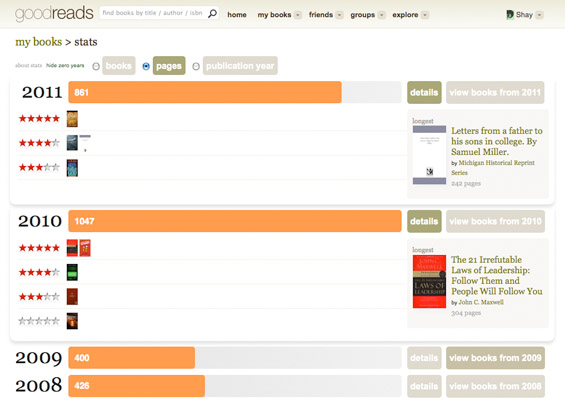
I’ve been using it for about a year now and I’m really starting to understand why I like it so much. The above image is data that Goodreads provides me about the books I’ve read over the past few years, with specifics to the amount of pages. In 2010 I read 1047 pages. So far this year I’ve read 861 pages. I can set goals on the number of books I want to read in a year (I’m hoping for 12 this year), and I can update my “current page” any time I want to see progress percentages and other info. You might be thinking this is pretty nerdy, and yes, it is. But the fun part about Goodreads is you can keep track of the books you own, get recommendations on books from friends, and kind of keep yourself accountable to a good reading schedule. I normally use their iPhone app to update my pages when I finish reading for the day and it’s quick and easy. Also, if you’ve never seen my “Bookshelf”, it’s a complete list of my books embedded in to my website that is automatically generated from Goodreads. Go see for yourself. So if you’re a reader (and I hope you are), then definitely check out Goodreads.
“All the world’s a screen”. At least that’s what my prof from college argues page after page in his book Meaning At The Movies. He also writes, “God made us in his image, and we make movies in ours”. So true. Sometimes the reason why movies (or television shows) are so entertaining to us is because it’s like looking in a mirror. We see our lives, emotions, thoughts, feelings played out before us and it’s very attractive and revealing about our own hearts. For more on this idea, pick up a copy of Meaning At The Movies, but in the meantime I wanted to show you this clip from a recent episode of The Middle that Bethany and I watched with great laughter and appreciation as it revealed a little bit about the human heart and parenting. If you’ve never seen this show, it’s about a “middle” class family in “middle” America. It’s a classic family sitcom, but it’s narrated from the viewpoint of the mom Franki (Patricia Heaton) to give us an insight in to her feelings and thoughts about being a mom and having a family in “the middle”. Here’s the clip:
The rest of the episode goes on to show just how the parents “take back their lives” in a pretty amusing fashion. The furniture in the living room is rearranged just the way mom wants it. The dad and mom are high-fiving every time they “take back” another portion of their lives, be it the kind of pizza they order, taking a parent’s night out with friends, not dropping everything to cater to any one of their kids specific/immediate needs, etc. Bethany and I were just laughing in agreement as the parents actually start to rule the home and not let the kids run the place. The kids of course are completely taken back that their parents are now saying “no” and their efforts to plead with the parents to go back to the way things were before simply creates hilarity throughout.
It all reminded me of a blog I read just this week from Jay Younts of the Shepherd’s Press blog titled “Go to Sleep!”. It’s a critique of a new book that tries to humorously discuss why kids just won’t “go to sleep” and are annoying their tired and frustrated parents. The problem is, as Jay Younts argues, “Children were never intended to be installed as rulers of the universe…”. And often this is exactly what they are in families today, rulers of their own schedules, bed times, toy selection, and the like. But there’s already a ruler of the universe — his name is Jesus. And when children begin to rule their own universe (e.g. parents, household, etc.), and when parents reinforce this sense of dominion in the child it will only frustrate everyone involved. That’s why we need the Gospel. Without the Gospel, Jesus doesn’t rule in our hearts and stake the claim He rightfully owns (paid for by His shed blood) in our homes, children, and families. What we end up with is a war for authority of which each little battle is often won by the children who finally win the war.
By the end of the episode both parents finally “give in” to one of their child’s needs and basically go back to their old ways. The furniture is rearranged to the way it was, the parents drop everything to meet their children’s needs, etc. Honestly, they needed balance in their approach, but it’s still sad that they couldn’t stay committed to ruling their home as the authority in the kid’s lives. In the final scene, Franki (the mom) goes outside to get the mail and another mom with a toddler in a stroller are walking by. The child is obviously not happy about something and you hear the other mom saying “What is it honey? Whatever you need I’ll get it for you.” Franki quickly approaches the mom and says, “Don’t do it! Don’t give him everything he wants!” It was a last ditch effort to keep her dream alive of helping another mom change her ways before it’s too late! The concerned mom just gives Franki an odd look, helps her child, and keeps walking down the sidewalk. As Franki stands there watching them walk away we hear her say “She won’t listen”, as if to say “It’s a lost cause. In the end, the kids win. Parents lose.” You’re right, Franki. If parents keep letting their kids rule the universe, it’ll be a lost cause to try and rule your home. It’s only when parents see that their children were designed for authority and limits that blessing will come.
*UPDATE: Joshua Harris was kind enough to read and link to my post today on his own blog. He’s a very humble man and he’s written some clarifying words on why he’s the “P. Diddy of Christian writers”. Here’s a link to his post.
I own two Joshua Harris books: Not Even a Hint and Stop Dating the Church. One of them is out on loan to someone, and the other I have two hard cover copies of just so I can give one away sometime. Both books are excellent in their subject matter and I regularly recommend them to people. And for that matter, both have great titles and great covers…or at least they used to.
Not Even a Hint is a book on sexual lust. It’s probably one of the best books on the topic both for the Biblical view it presents, and for it’s balance in handling a sensitive subject matter. I will often recommend it to young people, especially the college students I work with because it was in my own college life that I read it for the first time. Unfortunately a few years back I called the local Christian bookstore to find a copy for someone and they had no idea what I was talking about. I said, “I know it’s by Joshua Harris, and I know it’s called Not Even a Hint. I’m looking at my own copy right now”. The nice clerk responded, “Yeah, I don’t see it. Are you sure it’s still in print?” “It’s gotta be there!”, I said. She could probably tell I was annoyed. “The only thing on that subject I see is a book called Sex Is Not the Problem (Lust Is)”, she explained. My jaw dropped. Are you serious? I mean, I get the point, but that’s part of the problem. What college student is going to get comfy at their local Starbucks with that title staring everyone else in the face and basically exposing their own struggle to the entire room? Not a single one I know, that’s for sure.
Bethany informed me tonight that Josh Harris was re-releasing my other favorite book of his Stop Dating the Church under the new title Why Church Matters. Boring. Sounds like a theology book title, and is pretty generic to boot. But it’s not just the title he’s changing, look at that cover (below)! Did we just go back to the early 90’s? Is this some kind of joke? This is hands down (no pun intended) the best book on local church purpose and involvement and now they’re going to lose their audience (which I believe is a younger audience) to the hands of wonder. The font is old, the yellow line is out of place, and the hands…oh, the hands.
Now you might be thinking, “oh come on Shay, don’t judge a book by it’s cover — it’s an age old adage.” I know, I know, and for the most part I agree. It’s just I don’t have time to double check that the book I’m recommending my lust filled, church hating friend has the same title it did when I read it last week. I think Joshua Harris and his marketing team need to stop having second thoughts about each one of their covers and titles. Stop dating your book covers and commit already!
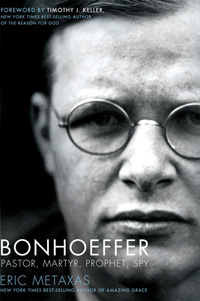 After 119 pages (of 608), I’m absolutely enthralled with Eric Metaxas’ biography on Dietrich Bonhoeffer. The life of Bonhoeffer is amazing to me (even after only 20% of the book), and Mextaxas is opening my eyes to a world that I just didn’t know about before. One thing that I just can’t get out of mind is the perspective Bonhoeffer has on the world around him as his extensive travels take him literally every where, including the USA in 1930 (post World War I). As a German national, he provides a very unique perspective our this side of the Atlantic, and it has challenged me to think about what it means to be a Christian and live in a specific country at any point in history. It’s a challenging thought as I think about how much living in America shapes my view of the world around me. Even though I strive to see it through a Biblical lens, I often see it through my American one, and that is sometimes hard to swallow. All that to say, I’m excited about the remainder of this story and this man. I hope to learn from his experiences, his insight, and maybe even his death.